How Clear Communication Transforms Financial Decisions

In finance, clear communication is essential when conveying complex concepts to non-technical stakeholders, especially when decision-makers’ eyes are on the big picture.
Achieving clarity means breaking down complicated ideas using plain language, avoiding jargon and employing visuals that aid understanding.
This article uncovers methods and tools that can make financial communication clear, accessible and actionable.
Finance is often described as a world of numbers, equations and high-stakes decisions. But there’s a hidden complexity beneath the surface: regulations, intricate risk models and financial products so convoluted that sometimes even the professionals are left scratching their heads.
It’s easy to feel lost in the sea of technical jargon, where clarity of message is often sacrificed for precision. But the truth is simple: if financial professionals in the back office can’t make their ideas accessible to the people out front who don’t share their expertise, even seasoned executives will make potentially disastrous choices.
I witnessed this firsthand working at the headquarters of a major bank, where I was tasked with explaining the intricacies of a project assessing risk within a $600 billion debt portfolio. This portfolio was far more than just a ledger of loans. It contained every scrap of credit card debt, mortgage, student loan and corporate bond that the bank owned.
The scale and stakes were enormous, but the real challenge was breaking it down for people who didn’t live and breathe numbers. By simplifying these concepts, I not only helped make the project more understandable but also gave others the confidence to act on it.
Clear financial writing doesn’t just make concepts simpler. It builds trust and empowers decision-making:
Trust and Confidence: Financial decisions shape the fate of companies, including their investors, clients and employees. When information is muddled or overly technical, it risks undermining trust and paralyzing action. A well-crafted explanation, on the other hand, invites confidence.
Avoiding Missteps: The consequences of miscommunication in finance are often costly, whether it’s approving a risky venture because of a misunderstood report or failing to spot a red flag. Regardless of who makes the decisions, it’s the writer’s responsibility to ensure clarity.
The Role of Financial Writers: Think of financial writers as the translators between two worlds: the technical, often cold language of finance and the intuitive, accessible language of everyday people. Their job is not to dilute the information but to make it comprehensible while keeping its integrity intact.
How do we explain a $600 billion debt portfolio, or a regulatory framework as dense as the Basel Accords? The task can seem daunting, but it can be done with three guiding principles:
Simplify Without Oversimplifying: Cutting through the fog of complexity is important, but so is retaining the heart of the message. For instance, describing a “foreign currency derivative” as “a contract that helps businesses protect against fluctuating exchange rates” keeps the concept intact without drowning in technicalities. On the other hand, describing it as “a type of loan” would oversimplify it, leaving out key details that are essential for understanding.
Use Analogies: Analogies create mental shortcuts, allowing the reader to grasp difficult concepts more quickly and retain them longer. By comparing complex financial concepts to familiar, everyday experiences, analogies make abstract ideas more relatable, and technical terms something your audience can more easily visualize or connect with. Analogies bridge the gap between the abstract and the concrete, ultimately making financial reports feel more approachable and tangible.
Use Clear, Concise Language: The simpler the language, the better. This doesn’t mean dumbing down the material—it means choosing words that are precise, straightforward, and free of unnecessary complexity. For example, explaining “Basel II” as “global rules to help banks avoid taking on more risk than they can handle” is far more approachable.
Now that we understand the principles behind clear communication, let’s look at the tools that make it possible:
Executive Summaries: An executive summary doesn’t just summarize. It distills the essence of the content. Take the $600 billion debt portfolio. This isn’t a dry recitation of facts, it’s the heart of the matter:
“The bank’s strategy balances high-risk and low-risk debt, ensuring overall portfolio stability.”
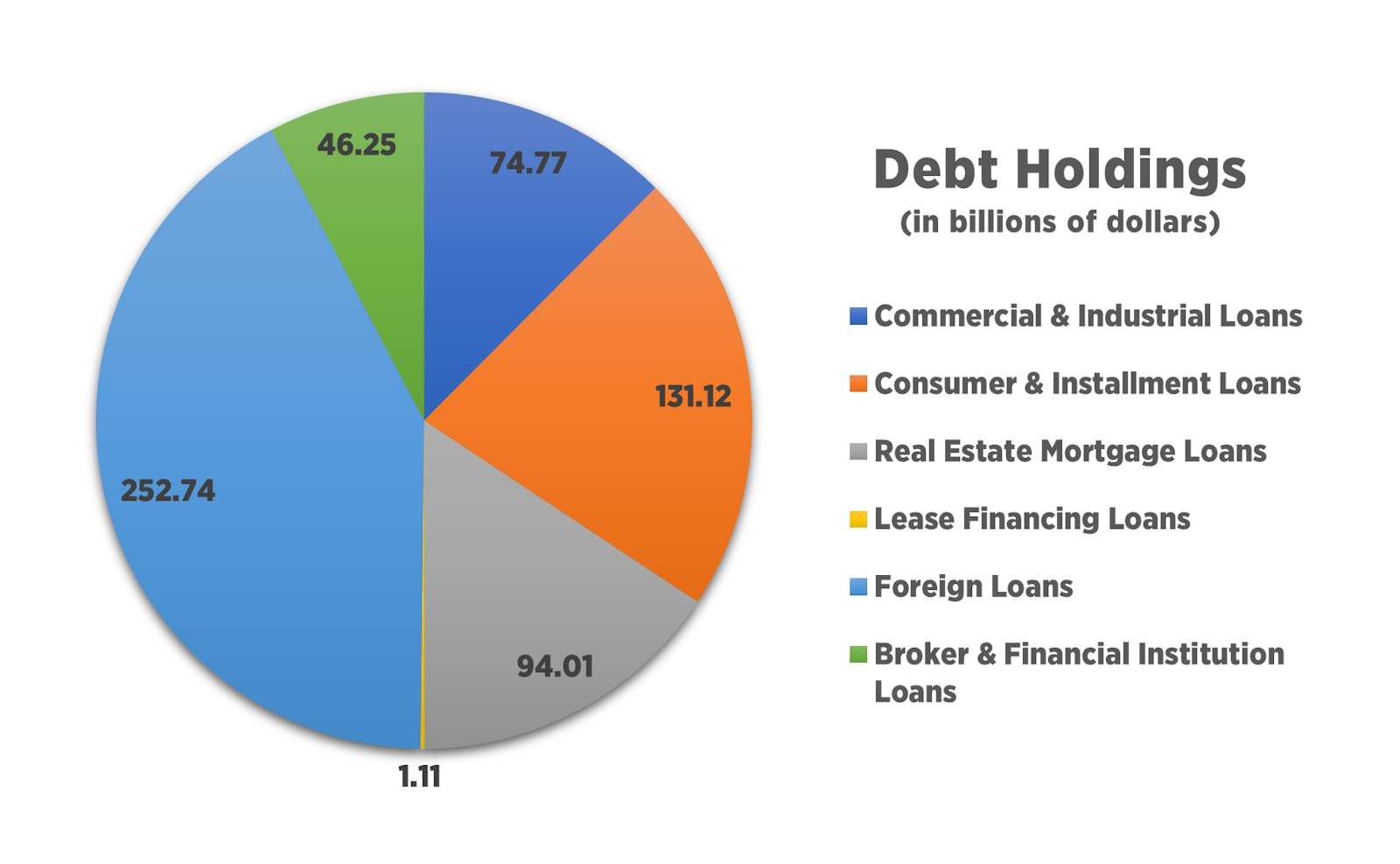
Visuals: Sometimes, a chart succeeds where words fail. A well-designed bar chart, pie chart, or line graph can take a pile of data and transform it into something intuitive, highlighting key differences at a glance and cutting through the clutter.
For instance, a pie chart showing the breakdown of risk in the portfolio instantly communicates the balance between different types of debt. It’s clear, immediate and unambiguous.
Analogies and real-world examples work together to make complex ideas not just understandable but vivid. Analogies bridge the gap between the abstract and the concrete, while real-world examples show the concepts in action. Both are essential for making finance feel tangible.
Take, for instance, explaining risk management. Imagine a family with a modest savings account, some cash tucked away in low-risk assets, and a portion invested in riskier stocks. Just as a family diversifies its investments to manage risk, a bank balances its loan portfolio between safer mortgages and riskier credit card debt.
This analogy not only simplifies the concept but allows the reader to picture it in their own life. Connections like this will lead to better decisions, as a personal understanding of the stakes makes every choice matter more.
Here are a few ways to elevate your financial writing:
Know Your Audience: Tailor your message to your reader. Senior executives may need a big-picture summary, while analysts might require more in-depth detail.
Tell a Story: Numbers and data aren’t just dry facts. They’re pieces of a larger narrative. Rather than presenting a laundry list of figures, walk your audience through the story: the problem, the solution, and the results.
Get Feedback: Before finalizing your work, let someone outside your team read it. If they don’t understand, consider further simplifying or rewording the explanation. Feedback is the best way to ensure clarity.
Clear communication in finance isn’t just simplifying complex ideas. We are building trust, fostering transparency, and encouraging informed decision-making. The better we get at breaking down these topics, the more we empower people to act with confidence and understanding.
By embracing principles of simplicity, clarity, and relatability, financial communication doesn’t just become easier to understand. It becomes a bridge between complexity and action, making it not only more accessible but also more effective. When we communicate financial information clearly, we empower others to make informed, confident decisions.